


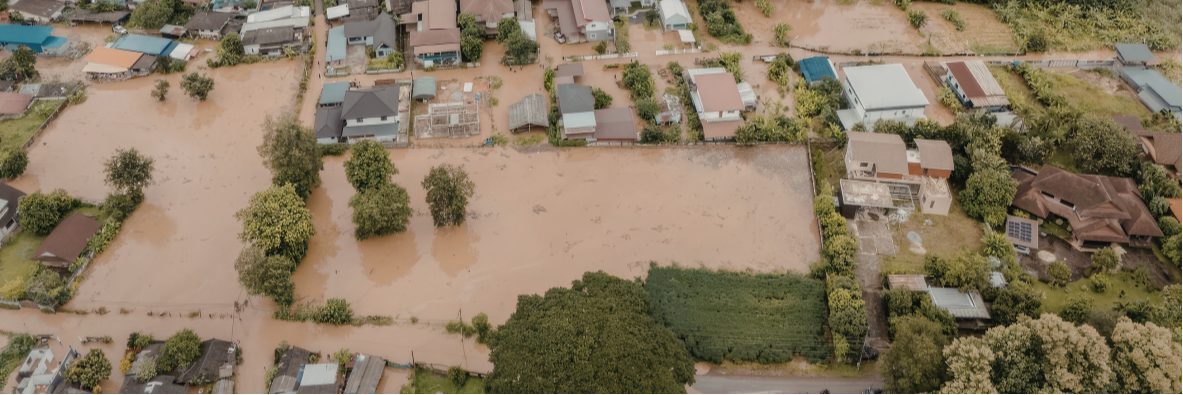
The floods that struck Southern Africa at the start of 2026 didn't just displace nearly a million people. They dismantled the very infrastructure needed to prevent the diseases the floodwaters helped spread.
723,000+ people affected by the floods in Mozambique1
6,500 cholera cases recorded since September 20252
229 health facilities damaged or flooded3
7× increase in cholera cases vs. same period in 20254
A year's worth of rain in ten days5
.png)
Between late December 2025 and mid-January 2026, an extraordinary amount of rainfall fell across Mozambique, Malawi, South Africa, and Zimbabwe. In some regions, what would normally fall over an entire year accumulated in just ten days, overwhelming drainage systems, bursting rivers, and submerging entire villages in Gaza Province, the worst-affected area.
This was not simply a natural disaster. A rapid attribution study by the World Weather Attribution (WWA) group, released on 29 January 2026, found that human-caused climate change made the extreme rainfall approximately 40% more intense than it would other wise have been6, turning asevere weather event into something unprecedented in living memory. LaNiña conditions compounded the effect, but scientists concluded that global warming was roughly twice as influential as the climate pattern in driving the disaster's severity7.
“Our analysis clearly shows that our continued burning of fossil fuels is not only increasing the intensity of extreme rainfall, but turning events that would have happened anyway into something much more severe,” said Izidine Pinto, Senior climate researcher at the Royal Netherlands Meteorological Institute.
When flood waters recede, they leave behind conditions ideal for waterborne disease transmission. Sewage systems overflow. Wells become contaminated. Communities crowd into displacement shelters with inadequate sanitation. It is a cycle that researchers have documented repeatedly across low- and middle-income countries, and one that Mozambique, already one of the world's most climate-vulnerable nations, has been forced to live through again.
By early 2026, Mozambique accounted for 90% of all cholera cases in Southern Africa8. Across five countries in the region: Mozambique, Malawi, Zambia, Zimbabwe, and Namibia, reported cases between January and mid-February 2026 were more than seven times higher than during the same period in 2025: 4,320 cases and 56 deaths, compared to 586 cases and 11 deaths a year earlier9.
The projections: WHO Africa warned in February 2026 that Southern Africa faced a critical window between March and August, with projections of 12,000 to 22,000 additional cholera cases under the most probable scenarios10, driven by continued displacement, damaged water systems, and the ongoing cyclone season.
What makes the 2026 Mozambique crisis a defining case study in climate-health vulnerability is not just the scale of the outbreak, but the simultaneous destruction of the infrastructure meant to contain it. Mozambique's Ministry of Health reported that 229 health facilities were damaged or flooded during the crisis11. In Gaza Province alone, the epicentre of displacement, nearly 100 health centres were impacted, with 23 forced to close and 20 completely inundated.
Flooding also severed one of Mozambique's main transport arteries, National Road Number One, partially cutting the country's north-south supply chain. Helicopters had to be deployed to deliver emergency medical supplies: antimalarial drugs, anti retrovirals, and oral rehydration solutions, to isolated districts such as Chókwè and Guijá. Meanwhile, malaria cases in Gaza Province surged from approximately 2,500 during the same period in 2025 to over 12,400 in 202612.
The cascade is stark: climate shock → infrastructure collapse → water contamination →disease outbreak → overwhelmed and physically damaged health system → delayed treatment → preventable deaths. This is not a sequence of separate crises. It is a single event unfolding in connected steps.
.png)
Mozambique's experience in early 2026 was the most severe, but it was not isolated. Across Southern Africa, the same flooding event triggered cholera outbreaks in Malawi, Zambia, and Zimbabwe, and South Africa.
Southern Africa has served as the continent's dominant cholera hotspot since 202313, the 2026 floods represent an acceleration of a trend that public health experts have been warning about for years: climate extremes, combined with fragile water, sanitation, and health infrastructure, will increasingly produce compounding health emergencies in the world's most vulnerable communities.
A peer-reviewed study published in PLOS Neglected Tropical Diseases found that even under the most optimistic warming scenarios targeted by the Paris Agreement, 1.5 to 2°C, diarrhoea hospitalisations are projected to increase by 4.5 to 7.4% by the end of the century, with children under five facing increases of up to 9.4%14. Each fraction of a degree, in other words, is not an abstraction — it translates directly into sick children, overwhelmed clinics, and preventable deaths.
Yet despite this evidence base, the gap between scientific knowledge and policy action remains wide. The 2026 UN Water Conference, scheduled for December in UAE, and WHO's newly launched WASH Strategy 2026–2035 both represent critical policy windows. But a UN-Water assessment published in January 2026 found that while 80% of countries include climate risks in their WASH plans, only 20% have financing mechanisms to protect the most vulnerable populations15. Plans without funding are not protection.
"The sharp rise in cholera cases isa clear reminder of how climate-related shocks are intensifying public healthrisks." Dr Marie Roseline Darnycka Belizaire, Emergencies Director, WHORegional Office for Africa (February 2026)
Behind every statistic in this brief: the 229 damaged clinics, the sevenfold rise in cases, the helicopters ferrying rehydration salts over flooded roads, are communities that did not cause the crisis they are living through. The science now exists to predict these cascades with increasing precision. What remains is the collective decision to act on it.
About the project:
SPRINGS is an EU-funded project focused on addressing the impact of climate change on waterborne diarrheal diseases. Diarrheal diseases are currently the third leading cause of death in children under 5 years of age globally. Compounded by global climate projections indicating increased precipitation, flooding, and drought, there is a looming threat to the progress made in reducing diarrheal disease burden. To inform and prioritise effective political responses, SPRINGS is building 4 case studies in Italy, Ghana, Romania, and Tanzania with contrasting vulnerabilities.
13 WHO, 2026
15 WHO, 2026