


Heavy rain is forecast and your city needs advice. What would you actually want to know?
That's the question researchers from the EU-funded SPRINGS project will put to a room in Cork on Tuesday 6 October.
The workshop, When Water Becomes the Challenge, runs from 17:30 to 19:30 in the Aula Maxima at University College Cork. It's open to anyone working where climate, water and public health meet: city and county officials, water services and utility staff, public health teams, emergency planners, researchers and students. No prior knowledge of the project is needed.
The evening is built around a real-world scenario, with time for networking over snacks and refreshments.
The starting point is a tension anyone who has sat on a city emergency committee will recognise. Two people can look at the same forecast and need completely different things from it.
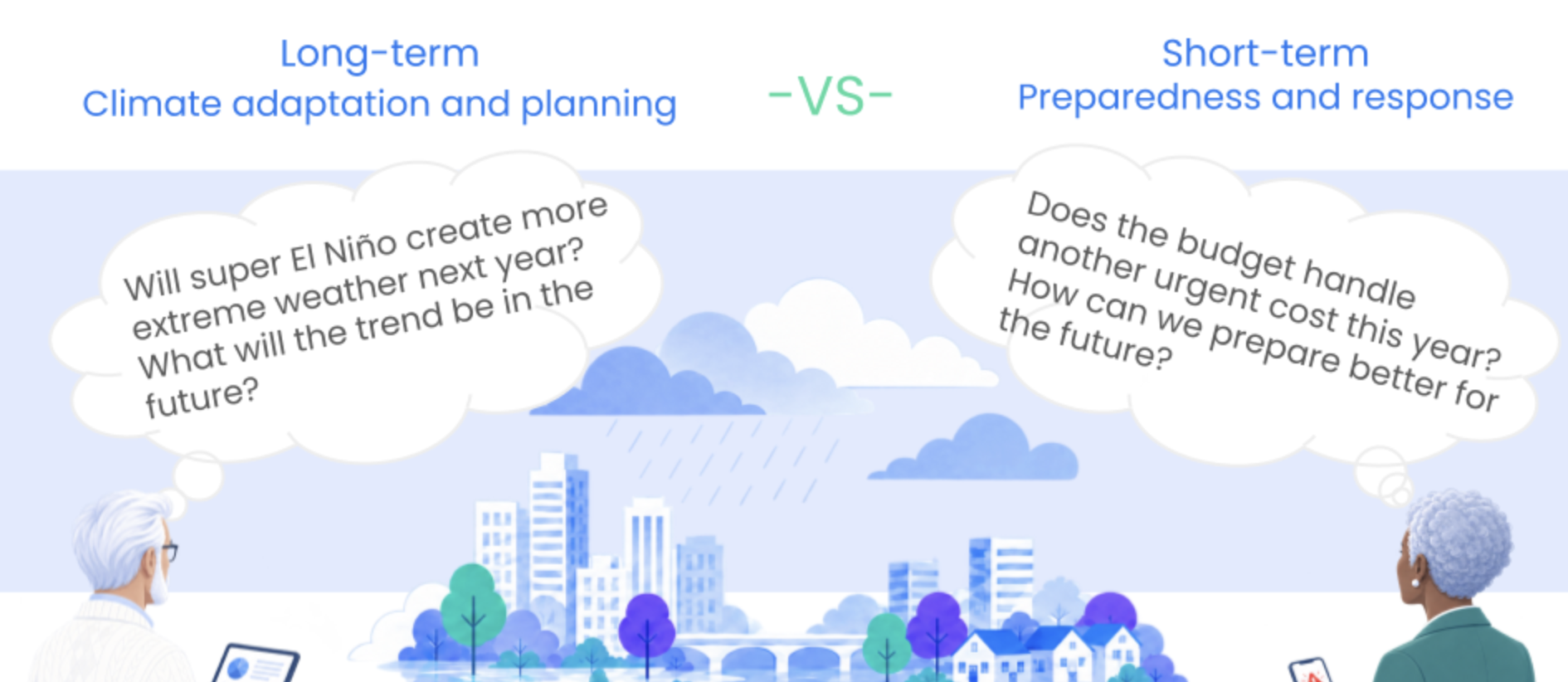
Say a seasonal outlook lands on the table pointing to a wetter, stormier year ahead. The long-term planner wants to know whether it signals a lasting shift, and what that means for a decade of capital investment. The short-term responder wants to know whether this year's budget can absorb another urgent cost, and how to prepare better next time. Both are fair questions. They rarely get answered by the same piece of information, and the services producing climate, water and health data aren't always designed with either user in mind.
The workshop brings that gap into the room with the people who experience it in practice. What the SPRINGS team wants out of the room is practical: which information city decision-makers actually need, at what lead time, in what form, and from whom.
SPRINGS is a five-year research project, funded by the European Union under Horizon Europe, looking at how climate extremes change the risk of waterborne diarrhoeal disease and what governments can do about it. Diarrhoeal disease remains a leading cause of death in childhood, and climate change is expected to push that risk higher: heavy rain, flooding and drought all affect the quality and the quantity of the water people drink. Ageing infrastructure, sewer overflows during intense rainfall and drought-stressed supply are pressures cities face across Europe as much as anywhere else.
Thirteen partner organisations are involved, spanning climate science, environmental science, public health, economics and the social sciences, coordinated from Amsterdam by the Academic Medical Center with the Amsterdam Institute for Global Health and Development.
Field case studies run in Ghana, Tanzania, Italy and Romania. Alongside the modelling and surveillance work, the project runs dialogue workshops with decision-makers, which is what brings it to Cork.
The timing is deliberate. Cork is hosting the Summit of Mayors on 5-6 October, bringing city leaders and delegates from around the world to the city. SPRINGS will host the workshop on the second evening as a side event, while that audience is in town.
When Water Becomes the Challenge